Thursday, November 19, 2009
My Comments On Article, "Earth To Lou: It Didn't Have To End This Way
Earth To Lou: It Could Have Been Different
Print This Post It didn't have to end this way for Lou Dobbs. He could have been a contender.
But Dobbs, a supremely self-confident man who often mentions his Harvard education in private conversation, just wouldn't listen. Time after time, as the "Lou Dobbs Tonight" show he has hosted on CNN since 2003 grew more rabidly critical of undocumented immigrants, he was warned of the kind of people he was putting on his show. He was told that many of the "facts" he was presenting just weren't so. At first, he was gently called out for his defamations of Latino immigrants, then, as his tone grew sharper still, he was subjected to all kinds of public criticism from human rights groups, the journalism trade press, even a leading New York Times financial columnist. Instead of righting his course, or even slightly moderating his tone, Dobbs called his critics "commies" and "fascists." He fudged facts, defended earlier falsehoods, and promoted racist conspiracy theories. He fumed.
It all ended last night, when Dobbs announced on his program that he was resigning from CNN effective immediately. In a moment of supreme irony, he complained that public political debate was now overtaken with "partisanship and ideology," and promised to use "the most honest and direct language possible" in whatever future role he plays in public life. For once, he did not attack his critics.
My colleagues at the Southern Poverty Law Center (SPLC) and I were some of those critics, and early ones at that. I began speaking to Lou Dobbs in 2004, not many months after he started airing virtually nightly segments entitled "Broken Borders." By that time, he had already run "reports" complaining about "illegal aliens" getting free medical care, educating their children in public schools, committing sex crimes, getting breaks on college tuition, filling the prisons and spreading diseases.
To my surprise, Dobbs answered my very first call immediately. He was interested in what I had to say, he said, and responded to my warning that an upcoming guest had ties to white supremacy by canceling the appearance. He asked that I keep him apprised of any similar situations. He said he was all in favor of multiculturalism.
That kind of back-and-forth culminated in Dobbs sending a five-person team from his show to the Montgomery, Ala., headquarters of the SPLC, in November 2004, after we contacted Dobbs about a guest who promoted the "Aztlan" conspiracy theory alleging a Mexican plot to "reconquer" the American Southwest. After much of our staff and I spent most of the day briefing Dobbs' people, they left saying that Dobbs planned a three-part series on extremism in America, and another on racism within the immigration restriction movement. And for a short time, Dobbs seemed open to hearing our criticisms and warnings. But that all came to end on his July 29, 2005, show, when he erupted over an SPLC report exposing racist elements in the Minuteman vigilante movement. Dobbs called us "despicable" and "reprehensible," although he did not dispute any of the facts we reported.
From there, things went south. That winter, we ran a story detailing members of extremist groups who Dobbs had put on his show. A few months later, we pointed out that in discussing the Aztlan conspiracy on the air, Dobbs used a map of the area Mexico supposedly coveted, explicitly attributed to the Council of Conservative Citizens — a group that has described black people as "a retrograde species of humanity." Then, on March 6, 2007, I was quoted on NPR saying that Dobbs was helping to mainstream conspiracy theories and propaganda that originated in white supremacist hate groups. Enraged, Dobbs called me a few days later to say that the SPLC and I had no integrity, and that, henceforth, we would be "adversaries." A couple of weeks later, I went on Dobbs' show to point out that Chris Simcox — the original founder of the Minuteman movement and a guest Dobbs had had on his air at least 17 times at that point — had told his followers that he had personally seen Chinese Red Army troops maneuvering on the U.S./Mexican border in preparation for an invasion. Dobbs seemed to find that funny, but he didn't repudiate Simcox.
Then, on May 6, 2007, I was quoted in a "60 Minutes" profile of Dobbs. CBS' Lesley Stahl pointed out in the piece that Dobbs had claimed in 2005 that "an invasion of illegal aliens" was "threatening the health of many Americans" and followed that up with a report claiming that 7,000 new cases of leprosy had been identified in America in the prior three years. (The truth is that there were about 400 new cases in the years in question, that leprosy is now an easily treatable disease, and that no one knew what role immigrants may have had in any leprosy case.) I criticized Dobbs' "journalism" in the piece, which sent Dobbs into a rage the next day on his own CNN show. He said he stood "100%" behind his bogus report, and he had his reporter re-identify the source of her allegations — a right-wing fanatic named Madeleine Cosman, who the SPLC had earlier documented telling an audience that "most" Latino immigrant men "molest girls under 12, although some specialize in boys and some in nuns." Cosman had no expertise in immigration or medicine.
The last time I was on Dobbs' show was on May 16 of that year, along with my boss, SPLC President Richard Cohen. (Our appearance followed by a day the printing of SPLC ads in The New York Times and USA Today calling on CNN President Jonathan Klein to retract Dobbs' false leprosy claim, as Dobbs himself refused to do so.) Our interview was preceded by a setup piece containing a completely new set of claims about leprosy. Now, Dobbs claimed that new cases of leprosy had "risen" to 166 in 2005. Nothing was said about the supposed 7,000 cases, and Dobbs never conceded any error at all. The mail we got after the show from Dobbs' supporters was memorable. "You people disgust me and I hope you burn in Hell," wrote one. "In memory of your appearance on Lou Dobbs, I will make a GENEROUS donation to a well known hate group in YOUR NAME." Another put it like this: "You can shove tolerance up your ass as far as possible. Hate is alive and growing!" And a third wrote to regret that cowboy days were over, otherwise "you and your associates would be hanging by a rope."
We fared a little better with The New York Times, where David Leonhardt wrote a long column concluding that "Mr. Dobbs has a somewhat flexible relationship with reality." Around the same time, the Columbia Journalism Review wrote that Dobbs was "tamper[ing] with facts" and "pretending the confusion was someone else's fault." Dobbs' response to all of this was to attack SPLC and the Times, informing his CNN audience that he would tell them "who's really telling the truth and who the commies are and who the fascists are who have the temerity to attack me."
In the years since, SPLC has regularly written about Dobbs, documenting the real truth about his various claims and pointing out his role in poisoning the debate about immigration in the United States. Our point was never to stop a robust debate about immigration — quite the contrary, we were all in favor of such a debate, but felt that it should be based on facts, not racist propaganda or conspiracy theories. Finally, in late July of this year, after Dobbs seemed to suggest that President Obama was not a U.S. citizen, SPLC President Cohen wrote CNN's Jonathan Klein to ask that Dobbs be fired. "Respectable news organizations should not employ reporters willing to peddle racist conspiracy theories and false propaganda," Cohen wrote. "It's time for CNN to remove Mr. Dobbs from the airwaves." The letter set off a chorus of similar demands from other human rights groups, and a movement by many of them to press that demand grew quickly. It concluded yesterday with Dobbs' departure.
Did it have to happen this way? Obviously not. But Dobbs never could hear anyone whose opinions varied from his own. When he was confronted by Stahl in the "60 Minutes" piece about his leprosy error, Dobbs' response was typical. "Well, I can tell you this," he told Stahl. "If we reported it, it's a fact."
Stahl replied, "You can't tell me that. You did report it."
Dobbs: "Well, no, I just did."
Stahl: "How can you guarantee that to me?"
And then, this gem from Dobbs: "Because I'm the managing editor, and that's the way we do business. We don't make up numbers, Lesley, do we?"
As it turns out, he did. No longer, however, at CNN, "The Most Trusted in Name in News." Not any more. But it didn't have to be this way.
Monday, November 2, 2009
Commentary On Article from AIsh.com
This Is It
Michael Jackson
This is it, here I stand
I'm the light of the world, I feel grand
Got this love, I can feel
And I know yes for sure, it is real
And it feels as though I've seen your face a thousand times
And you said you really know me too yourself
And I know that you have got addicted with your eyes
But you say you gonna live it for yourself
Oh
I never heard a single word about you
Falling in love wasn't my plan
I never thought that I would be your lover
Come on baby just understand
This is it, I can say,
I'm the light of the world, run away
We can feel, this is real
Every time I'm in love, that I feel
And I feel as though I've known you since a thousand years
And you tell me that you've seen my face before
And you said to me you don't want me hanging round
Many times wanna do it here before
Oh yeah
I never heard a single word about you
Falling in love wasn't my plan
I never thought that I would be your lover
Come on baby just understand
This is it, I can feel
I'm the light of the world, this is real
Feel my song, we can say
And I tell you feel that way
And I feel as though I've known you for a thousand years
And you said you want some of this yourself
And you said you want to go with me all the while
And I know that it's really true myself
Oh yeah
I never heard a single word about you
Falling in love wasn't my plan
I never thought that I would be your lover
Come on please baby understand
I never heard a single word about you
Falling in love wasn't my plan
I never thought that I would be your lover
Come on baby please understand
Oh yeah
I never heard a single word about you
Falling in love wasn't my plan
This Is It!
Sunday, November 1, 2009
This Is It
by
Gideon Silverstone
dance. Thirty white kids at a Jewish school spending all of our spare time perfecting our respective moonwalks. Such is the power of fame.
Block quote start
One dancer reveals that he's searching for something to believe in, to make his life better – and this is it.
Block quote end
footage of what was to be his farewell tour. Indeed the movie opens with interviews of various hopefuls who are trying out for a spot in Jackson's dance
troupe. Each of them explains why they want in so badly and their reasons are somewhat startling: this will be the best experience of their lives; Jackson
means so much to them; this is all they ever wanted to do and so on.
his life better -- and this is it.
A talented singer? An excellent performer?
Thriller video. One can't help but feel that this would have been a fantastic farewell tour. It's a shame.
Block quote start
I think Jackson himself was aware of the danger lurking behind the cult of celebrity.
Block quote end
watching Jackson's performances during the movie are what one should expect: singing along, enjoying the return of a talented performer. But there are
times when the people watching whip themselves into such a frenzy of dancing and cheering that it borders on worship. In fact, at one point Kenny Ortega,
the director of both the film and the entire tour, says "It's like a church in here. The church of rock 'n roll." And therein lies the problem.
without elevating him to a superhuman level? Clearly Jackson's personal life demonstrated that he had his fair share of problems. So why do we pretend
otherwise?
for his fans -- the movie makes this clear -- he did not enjoy the severe public scrutiny. And we fans are partly to blame for this. Perhaps if we had
treated him as a performer rather than a prophet, things would have ended differently for him.
Jackson's popular song "Man in the Mirror:"
I'm asking him to change his ways
And no message could have been any clearer
If you wanna make the world a better place
Take a look at yourself and then make a change
http://www.aish.com/ci/a/68177057.html
and help us continue to give daily inspiration to people like you around the world.
https://secure.aish.com/secure/pledge.php
or mail a check to Aish.com, 408 South Lake Drive, Lakewood, NJ 08701
http://www.aish.com/
Saturday, October 31, 2009
Shooting In California
Micaiah b. Malachi
Halloween
Micaiah b. Malachi
Thursday, August 27, 2009
Memories Shared & Personal Memories
Wednesday, August 26, 2009
We Have Something In common!!!
Feb. 18, 1958 to Feb. 07, 1959
Feb. 06, 1970 to Jan. 26, 1971
Dogs are honest,straightforward,and friendly. They are extremely protective of themselves and their loved ones. With a passion for fair play and justice, they never fail to rescue you time after time. They may rant and rave, but they never rest until they right the wrong. They are true humanitarians and suffer with the world. In spite of their concern for others,social graces and fancy parties do not impress them. Having sharp eyes, they will see through people's motives. They are quite private about their personal lives and someone prying into their affairs make them secretive and withdrawn. Once you gain their confidence, they open up freely.
Once Dogs classify you, they rarely change their minds. There are few in-betweens. Dogs perceive things either in black or white. You are either friend or enemy. Luckily, they are good judges of character and have superb insight into human nature. Dogs are tolerant of their friends. Before they approve of you, the friendship must develop slowly with a variety of meetings and conversations. If they look you over and decide they can trust you, you remain in their hearts forever. If you need them, Dogs will be there.
When the time is right, Dogs work long and hard, but they know how to relax, and enjoy their home and loved ones. The Dogs have playful moods and a great sense of humor. They have quick emotions and if you offend them, they will snarl and insult you with expertise. They forgive with the same speed. Dogs are intelligent and well-balanced. With their stable minds, they make good counselors or psychologists. They endure during any crisis situation. They are trustworthy people and know how to keep a secret. Being efficient and very diplomatic, they can hide their prejudices well. Most Dogs have a comfortable home and do well. Dogs always defend what is theirs and have a high sense of value. Home and family come first,and Dogs will work to see that they have the best!
Tuesday, August 25, 2009
Only The Good Die Young?
The toxicology report from the L.A. Coroner's office in the investigation of the cause of Michael Jackson's death was finally released to the public yesterday. According to the Associated Press, various drugs to help Michael Jackson sleep were found in his body. Basically, when one drug didn't work, the doctor gave Michael another drug. When the second drug didn't work, another drug was given. In the end, Michael was given a drug called Dipravan by I.V., which is only given in hospitals before surgery. According to the doctor, he checked on Michael Jackson about a half hour after he administered the Dipravan only to discover that Michael wasn't breathing. That's when he tried to resuscitate Michael to no avail. Now, with the toxicology results and the various raids on the doctor's properties, it's said that there's a possibility that the doctor will be charged with murder. As to whether he'll be charged with Second Degree or Manslaughter, that's not yet known.
I wasn't at all shocked over the news. Some people wondered whether Michael Jackson had committed suicide, but he wouldn't do that, especially knowing that he had children that depended on him. He didn't want to hurt his children by committing suicide. One thing I've noticed from reading history and now experiencing history is that it seems like those who have done all they could to do the right thing by addressing the social problems that plague our world end up dying young. Why is that?
When Moses was leading the Israelites out of Egypt to the Promised Land, many of those who left with him complained about the hardships in the wilderness. They started questioning God (G*D). The many little miracles--the parting of the Red Sea, the Egyptians drowning in the Red Sea in their chariots, etc.--that Moses pointed out as these events unfolded, didn't seem to matter to the people. All they saw was that Moses was leading them out of familiar territory into the unknown to be stranded. Yet, many years after Moses's death, he's now remembered by Jews for being the best leader; the one who, with G*D's guidance, led us out of Egypt. When Jesus was carrying the message of the Torah to the common people, they were drawn to him. His messages spoke of brotherhood and treating "others as you would want to be treated". He also made G*D into a personal G*D. However, the Sanhedrin, who had power over the common Jews, saw Jesus as a political threat because this meant that the Sanhedrin could no longer control the common people. As a result, he was crucified. Jesus' message of universal brotherhood didn't die with him, though. His message still endures to this day. During the 1960s, Martin Luther King Jr. went to many cities throughout the southern part of the United States and spoke of equality for all regardless of race, creed or color. Even though such bills as the Voting Rights Act, which gave Blacks the right to vote, and the Civil Rights Act, which declared that people couldn't be denied services based on race or religion, were passed, there were still many Whites who felt threatened by Martin Luther King Jr. and his message. As a result, he was assassinated, but his message still lives on to this day. Not only have many more public places become desegregated since the 1960s, but we now have a Black president named Barack Obama. There are many others like the afore mentioned, but I don't want to bore the reader. Finally, Michael Jackson started out singing bubblegum music when he was part of the Jackson Five/The Jacksons. Then, in the mid 1980s, he started singing songs about "we", as a people on this earth, "are the world", affecting social change by starting with the "man in the mirror", and healing the world so that this "world can be a better place". (We Are The World by U.S.A. for Africa, Man In The Mirror by Michael Jackson, Heal The World by Michael Jackson) He also had White children not only because that's what he wanted, but also to state the fact that, if White people can have Black children, then Black people can have White children as well. As he stated in a song, "It don't matter if you're Black or White". (Black Or White) There were many who didn't like the fact that Michael had White children. As a result, various allegations were made against him for child molestation and sleeping with children. In an interview on a CBS program called Sixty Minutes, regarding these allegations, Michael said, "Jesus said to love all always". He went onto say that he saw God in the children's faces. The alleged charges were dropped, but bad publicity portraying Michael Jackson as a pervert in tabloids and news media prevailed. The next thing everyone learned on June 25, 2009 was that Michael Jackson was found dead at the age of fifty years in his rented mansion. Two months later, we now learn that he was murdered. All Michael Jackson was doing was carrying out the messages of love, universal brotherhood, and equality for all, which Jesus, Martin Luther King Jr. and many others not listed in my writing here carried out in their lifetime.
Though Moses was old when he died, everyone else mentioned here in my writing died very young. Why is that? Micaiah and I were discussing the answer to this question yesterday in my grief and anger over Michael Jackson's death. As I reflected more on Micaiah's answer during some quiet time, his answer made a lot of sense. Micaiah's answer to my question was that people who are evil feel threatened by those trying to affect social change. Those who work to affect social change shine a light on those who are unwilling to make changes. Those who are unwilling to make changes don't want to be told by others that they need to look at themselves in the mirror and make that change because this world is very ill and needs healing. They are happy with the world and their lives as it is. Thus, the evil people kill the messenger. As a result, it seems like the evil people live till they're old while the good die young. Moses, Jesus, Martin Luther King Jr. and the many others were messengers, but their messages are still alive. In turn, their spirits still live on. If we continue to carry Michael Jackson's message by living as an example, then all that Michael Jackson and those before him tried to do will not die. Like Moses, Jesus, Martin Luther King Jr. and others, Michael Jackson's spirit will also live on.
Makedah bat Leah.
Thursday, August 6, 2009
The Orphan
When I converted, I wasn't looking for a new community. But that's exactly what I found.
by Aliza HausmanI am an orphan. But my parents are alive and well.
I haven't spoken to my mother in over ten years. And I might as well not be speaking to my father, who I call (he never calls me) every six months for an always disjointed, awkward five minute conversation.
My close friends are comfortable with me calling myself an orphan. Some of them have confessed that hearing about my childhood has scarred them. It's the acquaintances, the new people who pop into my life, who laugh nervously when they hear me call myself one. "Are your parents dead?" I shake my head. "Then how can you be an orphan?" And they look slightly tremulous as they wait for my answer.
For a moment, I think about not answering, just letting it go, letting them stay in their perfect, pristine plastic bubbles where parents are supportive, kind, there-for-you. Most of my observant Jewish friends have grown up in happy, healthy two-parent homes. How can I tell them about the kind of parents I've had?I stopped loving my mother when I was eight. It was a defense mechanism.
I stopped loving my mother when I was eight. It was a defense mechanism. I knew if I continued loving her, it would kill me. Over the years, the older I got, the more violent my mother became. The mental illness warping her mind caused her to lash out in horrifying, unexpected rages. A hug turned into a slap. A calm conversation led her to throw knives at my head. Compliments became death threats.
On the last day I spoke to my mother, she held me down after her latest attack and covered my mouth to muffle my screams. I was 17. I ran away the next day and didn't look back until I was 21, when I came back to rescue my sisters. For the three years that followed, I fought my mother for custody of one sister before I finally won.
My father ran away when I was four. While I watched, my infant sister cradled my arms, my mother broke a ceramic platter over his head because he had been cheating on her. (I still have recurring nightmares.) At the hospital, the doctor told my father if it had been glass, he would have died.
My father moved out soon after. When I was 21, after 10 years of not speaking, I asked my father how he could have abandoned us with her. He told me, "I grew up without a father. I turned out fine."
Evicted
When my little sister recently moved back to New York City with her new husband, she couldn't find an apartment. Though they had saved up money for the move, landlords were skeptical about renting a $1000-a-month apartment to young working-class folks who didn't make more than $20,000 a year.
At every place my sister and I looked at together, we heard the same questions. "Don't you have parents who can cosign a lease? Don't you have parents than can act as guarantors?" Don't you have parents? Every single time, we were reminded of having no safety net, no parents to fall back on, no family to take us in when there's no place to go, no parents to fix seemingly unfixable situations. "We don't have parents," we said.
My sister ended up moving into an apartment with a stranger looking for roommates. She answered the least shady, online ad that she could find and finally, she and her husband moved in. But a week later, U.S. Marshalls broke into the apartment and evicted everyone, including the roommate who hadn't paid $20,000 in back rent. My sister explained this to me in throaty sobs over the phone. It wasn't the first time she'd been homeless. But now, it was her, her husband and a cat with no place to go.
We talked about giving the cat up for adoption (I'm deathly allergic) so they could move into the one-bedroom apartment I share with my husband. But my sister couldn't. "The cat is family," she explained. I felt overwhelmed by my helplessness. I was the older sister. I had always been the pseudo-parent who fixed things. But I had no idea how to fix things this time.Within minutes, I was inundated with offers from friends who were willing to open their homes.
I did what I have always done to cope with impossible situations, I wrote about it. I even posted something on Facebook. Within minutes, I was inundated with messages, emails and phone calls from friends who were willing to open their homes to my sister, her husband and maybe even the cat.
I converted to Judaism because I spent a childhood fervently praying to God but never feeling comfortable in my parents' Catholicism. At 14, I first read about Judaism and was shocked to discover all my thoughts about religion in one slim "Introduction to Judaism" book. When I finally converted at 26, I wasn't looking for a new community or even a new family.
But that is exactly what I found.
Within an hour of being evicted, my sister and her husband were moving into a new place. As soon as they were settled, my sister called again. She wanted to know if she could borrow some books. "What kind of books?" I asked. "You know, books on keeping kosher, books on keeping the Sabbath," she replied. She didn't want to offend the religious Jews who had taken her in.
I let go of my biological parents long before my conversion. I was more than happy to replace my birth parents with Abraham and Sarah, even if they were only my parents in spirit. That was already more of a connection, a deeper one, than I'd ever had.
But I never expected that when Abraham and Sarah adopted me, the Jewish community would become my safety net, there for me -- and my non-Jewish sister -- if I needed it.
Published: Sunday, August 02, 2009
Aliza Hausman
Aliza Hausman is a Latina Orthodox Jewish convert, freelance writer, blogger and speaker. Currently working on a memoir, she lives in New York with her husband who is pursuing rabbinical ordination.
Thursday, July 23, 2009
Reaction to "The "Unfathomable" Arrest Of A Black Scholar"
Someone In The Dark--Commentary & Lyrics
Someone In The Dark
Michael Jackson
All alone wishing on stars
Waiting for you to find me
One sweet night I knew I would see
A stranger who'd be my friend
When someone in the dark reaches out to you
And touches off a spark that comes shining through
It tells you never be afraid
Then somewhere in your heart you can feel the glow
A light to keep you warm when the night winds blow
Like it was written in the stars I knew
My friend, my someone in the dark was you
Promise me we'll always be
Walking the world together
Hand in hand where dreams never end
My star secret friend and me
When someone in the dark reaches out to you
And touches off a spark that comes shining through
It tells you never be afraid
Then somewhere in your heart you can feel the glow
A light to keep you warm when the night winds blow
Look for the rainbow in the sky
I believe you and I
Could never really say goodbye
Wherever you may be
I'll look up and see
Someone in the dark for me
Wherever you may be
I'll look up and see
Someone in the dark for me
Though you're gone star far away
Each time I see a rainbow
I'll remember being with you
Smiles coming through my tears
When someone in the dark reaches out for you
And touches off a spark that comes shining through
It tells you never be afraid
Then somewhere in your heart you can feel the glow
A light to keep you warm when the night winds blow
Look for the rainbow in the sky
I believe you and I
Could never really say goodbye
Wherever you may be
I'll look up and see
Someone in the dark for me
Wherever you may be
I'll look up and see
Someone in the dark for me
Monday, July 13, 2009
About Michael Jackson's Memorial Service, Reflection & Moving On
Sunday, July 12, 2009
Swim club president denies racism in pool controversy
- Story Highlights
- Swim club president John Duesler: "It was never our intention to offend anyone"
- "He knows what happened at the pool that day," day care director counters
- Duesler: Club is "very diverse," and had reached out because area pools had closed
- Duesler says club's board has yet to decide whether to reinstate center's contract
CNN
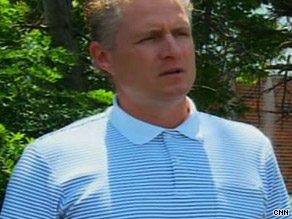
HUNTINGDON VALLEY, Pennsylvania (CNN) -- The president of The Valley Swim Club on Friday strongly denied charges of racism after his club canceled the swimming privileges of a nearby day care center whose children are predominantly African-American.
John Duesler said he underestimated the number of swimmers who would come to swim at the club.
Duesler said his club -- which he called "very diverse" -- invited camps in the Philadelphia area to use his facility because of the number of pools in the region closed due to budget cuts this summer. He said he underestimated the amount of children who would participate, and the club's capacity to take on the groups was not up to the task.
"It was a safety issue," he said.
The Creative Steps Day Care children -- who are in kindergarten through seventh grade -- went to The Valley Swim Club in Huntingdon Valley on June 29 after the center's director, Alethea Wright, had contracted to use the club once a week.
During their first visit, some children said they heard club members asking why African-American children were there. One youngster told a Philadelphia television station a woman there said she feared the children "might do something" to her child.
Days later, the day care center's $1,950 check was returned without explanation, Wright said.
She was dismissive of Duesler's comments Friday.
"He knows what happened at the pool that day," Wright told CNN in a telephone interview. "I was embarrassed and humiliated."
She called it an "unfortunate situation," adding, "I know what happened; the members know what happened and a higher power knows what happened."
After news reports of the incident, the office of Sen. Arlen Specter (D-Pennsylvania) said Specter sent a letter to the club president asking him to reinstate the contract with Creative Steps, saying, "I think that you would agree that there is no place for racism in America today."
Duesler said he appreciates the senator's concern, but the club's board has yet to make a decision of how it will proceed.
"If we're going to revise our policies here, we need to make it so for all the camps," he said. "I just don't think we're prepared for that."
Duesler earlier in the week told two Philadelphia television stations the children had changed "the complexion" and "atmosphere" of the club, a comment that protesters outside the facility Thursday said showed that racism was involved.
Bernice Duesler, John Duesler's wife, called the negative response her husband has faced since the incident "unbearable."
"He's not one of the good guys -- he's one of the great guys," she said, holding back tears. "He doesn't deserve this."
She added, "If there really was a racial issue that happened, my husband and I would be the first one[s] picketing."
Jim Flynn, who said he was one of the club members who made a complaint against the children, told CNN this week it was not racially motivated.
"There were a lot of children in the pool and not enough lifeguards," he said. "As general members we were not told that they were coming. If we knew, we could decide to not come when the pool was crowded or come anyway. We could have had an option."He also said invitations to two other day care centers, neither of which contained minority children, had previously been withdrawn.
Girard College, a private Philadelphia boarding school, told CNN on Thursday it would offer Creative Steps Day Care use of its facilities this summer.