Thursday, July 23, 2009

Reaction to "The "Unfathomable" Arrest Of A Black Scholar"

    I read the article Micaiah sent to everyone and posted on our blog about the Black scholar who was arrested.  He was arrested because he was reported to have been breaking into someone's home.  When the police arrived was when they finally learned that the so-called burglar was the home-owner.  Even though he had a key to get into the house, the White lady who called the police figured that he, probably, stole the keys from the home-owner and used it to break in.  As was stated in the article, non-Whites are often portrayed to be dangerous, and, thus, end up behind bars for crimes they've never committed.  Even when alleged charges are dropped, as was the case with Michael Jackson, and the prisoner's released, non-Whites are marked for life for the crime they were alleged to have committed.  The family and/or the public treat that victim as if he/she was the criminal.  In turn, his/her career is affected.  They're fired from their jobs, or, in Michael's case, are badly publicized to the point that the public and/or family  turns on them.  Such alienation doesn't stop with the victim, however.  Their immediate and extended families, and descendants are affected as well.  they are mistreated and are told horror stories about their dad or mother, aunt or uncle, sister or brother, grandma or grandpa, etc.  It gets to the point that everyone wants to believe the lie rather than the truth.
    I remember an incident four years ago here at our home.  It was about 9:00 at night when Micaiah and I heard a family altercation taking place at our next-door neighbor's house.  The sound of shouting and swearing finally ceased an hour later, so we thought that the altercation had been resolved or dropped altogether for awhile.  The next thing we knew, we heard a man's voice say to someone else, "I'm gonna get you, Bitch" as they proceeded to run down the sidewalk past our house.  Fearing that the man was preparing to hurt the person, Micaiah retrieved his Beebe gun, which looks like a real pistol, while I retrieved my cell phone to call 911.  Micaiah stood at our front entryway with the screen door closed with gun in hand while reporting the incident outside our house to 911 dispatch.  Meanwhile, we saw the couple trace their way back to their house, passing our house once again.  Suddenly, the line went dead.  We figured that 911 wrote down our report, so we decided to pour ourselves some coffee while waiting for the police to arrive.  The next thing we knew, Micaiah saw some bright spotlights shining on our house and I heard strange whispering outside our back door.  I figured that the police had gotten the wrong address, so I offered to walk with Micaiah down to where the squad cars were located.  As soon as Micaiah returned to the front entryway, he heard someone say, "there he is" followed by commands to come out of our house with our hands up in the air.  Our house was entirely surrounded with a SWAT team.  Confused with what was going on, I followed the instructions while they allowed Micaiah to drive his wheelchair slowly and carefully out onto our front porch.  As we were exiting, the female cop recognized us, acknowledging that she had stopped traffic for us numerous times before.  At that, the SWAT team lowered their guns while the female cop searched us thoroughly.  Apparently, the woman who was being chased called 911 while we were on the phone with 911, stating that they saw a "Black man with a gun standing in the entryway" and that she was fearing for her and her son's safety.  When the line went dead while Micaiah was on the phone, Dispatch wrote down the woman's report and disregarded ours altogether.  So, when the police responded, they were going by what Dispatch told them.  What it boiled down to was that we were portrayed to be dangerous, not ones who were out to protect someone and hold a perpetrator at bay until the police arrived.  Since the female cop instructed us to not use our gun unless the perpetrator is coming into our house, we now don't react when we hear someone sounding like they're threatening to hurt someone. 
    A few weeks after that incident, one of our neighbors called the police to report a burglary.  The neighbor must have insinuated that Micaiah and I may have been the culprits because the cop who responded came to our house to ask us some questions.  We didn't know anything about the attempted burglary, as it had happened in the middle of the night and the force of entry was in the rear of our neighbor's house.  Since the cop who responded was the same one on duty when we were almost arrested, he believed us when we told them that the neighbor often had many people over on weekends for drinking parties and that some of those people could've been the culprit.
    what it all boils down to in the end is that Micaiah and I watch what we do and say.  We also don't get involved with anybody personally or superficially unless they are close friends of ours.
 
Makedah bat Leah.

Someone In The Dark--Commentary & Lyrics

    A few years ago, someone gave me copies of some Michael Jackson CD's she had.  One of the albums was "Thriller", but the edition I was given also had a brief interview of Quincy Jones, producer of the Thriller album.  It also contained other songs that Michael did with Quincy Jones that weren't released on any of Michael's albums.  One of the songs was called "Someone In The Dark", which can be found on an audio album called "The ET Storybook".  That album was for those who'd never seen the movie, ET.  Not only is the song very beautiful in it's instrumentation, but the lyrics are beautiful in that it reminds me of when I watched the movie and when Micaiah and I met.  I wasn't too sure about this ET creature at the beginning of the movie, but I soon fell in love with him and wished that there was such a creature for me to meet and be friends with.
    When people think of ET, people think of some kind of space alien.  However, ET can also be viewed as someone who's here on earth by the way they're treated or feared because they're scared of what that person looks like or are intimidated by that person's intelligence.  People of color are often treated like a bunch of ET's.  Micaiah and I are people of color, and have been treated like we're different or something out of this world because of our talents and intelligence.  We met in the early evening of November 16, 1995.  It was dark by then here in the northern US.  It wasn't until much later in our relationship and having watched the movie again and heard "Someone In The Dark" that I realized that the relationship between Micaiah and I was similar to the relationship between the boy in the movie and ET.  Everywhere the boy went, ET was there. 
 
Makedah bat Leah.
 
---


Someone In The Dark

Michael Jackson


All alone wishing on stars

Waiting for you to find me

One sweet night I knew I would see

A stranger who'd be my friend


When someone in the dark reaches out to you

And touches off a spark that comes shining through

It tells you never be afraid

Then somewhere in your heart you can feel the glow

A light to keep you warm when the night winds blow

Like it was written in the stars I knew

My friend, my someone in the dark was you


Promise me we'll always be

Walking the world together

Hand in hand where dreams never end

My star secret friend and me


When someone in the dark reaches out to you

And touches off a spark that comes shining through

It tells you never be afraid

Then somewhere in your heart you can feel the glow

A light to keep you warm when the night winds blow

Look for the rainbow in the sky

I believe you and I

Could never really say goodbye

Wherever you may be

I'll look up and see

Someone in the dark for me

Wherever you may be

I'll look up and see

Someone in the dark for me


Though you're gone star far away

Each time I see a rainbow

I'll remember being with you

Smiles coming through my tears


When someone in the dark reaches out for you

And touches off a spark that comes shining through

It tells you never be afraid

Then somewhere in your heart you can feel the glow

A light to keep you warm when the night winds blow

Look for the rainbow in the sky

I believe you and I

Could never really say goodbye

Wherever you may be

I'll look up and see

Someone in the dark for me

Wherever you may be

I'll look up and see

Someone in the dark for me


Monday, July 13, 2009

About Michael Jackson's Memorial Service, Reflection & Moving On

    I felt it necessary to do this to provide that closure to the last two and a half weeks.  Though I wrote about it in my personal journal that Tuesday evening after Michael Jackson's memorial service, I never got around to editing it for our blog so as to eliminate wordiness until now, as I was still raw with deep emotion.
    As I said, Michael Jackson's memorial service was on Tuesday, July 7.  Micaiah and I watched it on CNN.  The service was held at Staple Stadium, where, come to find out, Michael's last rehearsal for the London Tour took place the night before he died.  The service began with an old Black spiritual being sung as Michael Jackson's coffin was being brought to the front of Staple Stadium.  I don't remember the name of the song, but it was went something like "The King is coming".  It was so beautiful and fitting that I almost started to cry.  Of course, my eyes welled up with tears when his coffin was finally placed in front of the stage because it was the moment of finality.  There were various speeches and performances.  One particular speech was the one Reverend Al Sharpton made.  To Michael's children, Al said something like, "The public said that your daddy was strange, but it was what your daddy had to deal with from the public that was strange."  Yes, Reverend Al Sharpton did join in on making negative statements about Michael during Michael's trial, but what he said at his memorial service was perfect and couldn't have been said better.  As the audience clapped, I stretched my arms out as if to hug Al.  Marriah Carey performed I'll Be There at the beginning after the first speech following the placement of Michael's coffin.  Because she was so choked up, she could barely get her voice to carry, but she got through it and her voice got better as she sang.  The outstanding performance was Jennifer Hudson singing Will You Be There, which was a song from the Free Willie soundtrack.  There's nobody who can do it as well as Michael did, but Jennifer was as close as you could get in her expressing the energy Michael did in the actual song.  Then, there was a performance done by a little boy who was about ten or twelve years old.  Not only did he sound like a Michael Jackson reborn, but come to find out at the conclusion of the service, the youngster was scheduled to appear with Michael in the London Tour.  As this youngster sang, I could hear, feel and see Michael's spirit in him.  There'll never be another Michael Jackson, but this youngster, though White, was as close as you could get.  Hip-hop singer Usher also performed a song that he wrote in tribute to Michael.  Unfortunately, Usher couldn't sing the whole song because he fell apart in tears.  It was really heart-wrenching.  Other performances and speeches were by Lionel Richie, Queen Latifa, and a Congresswoman who was part of the Black caucuses.  The black Caucus is trying to push through a resolution in honor of Michael Jackson, which, unfortunately, has to be discussed on the House floor.  Since the House is primarily made-up of White conservatives, pushing Resolution 600 may be a hurdle.  If it does pass, it'll only be out of sympathy and public outcry from fans who know or hear about Resolution 600.  At the conclusion of the service, before the pastor's concluding speech and prayer, the artists who performed sang We Are The World with Lionel Richie in the lead.  Of course, the performance could never be repeated exactly in the same manner as the original performance back in 1985, but they did well with it.  The performance of We Are The World was followed with children up on stage singing Heal The World.  I remember when I first heard that song back in 1993 as if it was just yesterday or today.  I had my radio playing while I was cleaning my apartment when Heal The World came on.  I hadn't planned to pay much attention to the song, as the radio station was playing a bunch of garbage beforehand.  Then I heard that Michael Jackson was singing.  The next thing I knew, I was listening to every word.  I'd never heard it before, but it touched my heart in the same way We Are The World did that I cried.  In fact, the song reminded me of We Are The World.  I knew that I couldn't afford the album it was on, but I was determined that I was going to, at least, buy the single.  When I heard Heal The World, it had been eight years since I'd heard something as beautiful, like We Are The World.  To this day, I cry a little from time to time when I hear Heal The World, but that Tuesday, July 7, I cried like never before when they performed it.  I was crying so uncontrollably that I couldn't focus on just listening to the performance.  I knew the words by heart, but I could barely hear them through my uncontrollable sobbing.  Not only does the song touch my heart every time, but the true reality of the Michael Jackson era having ended--all the humanitarian things he did through his music and action, which was above and beyond what everyone else has done--finally sunk into my core.  In fact, a few days after Michael's death, Micaiah and I happened to be talking to somebody who also loved Michael Jackson as much as we do.  We exchanged our favorite things about Michael.  Micaiah said that he liked everything about Michael; the person we were talking to said that her favorite was his dancing; and I, not really knowing what to pick since I, too, loved everything about him,  picked the humanitarian things he did through his music and actions as my favorite part about Michael.  I went onto talking about how there are so many who sing about fixing the world and address the social problems that plague our world in their songs but don't actually go out there to do anything about it.  Bono of U2 is one such case.  He addressed the problems but didn't go to the places affected.  Michael, on the other hand, not only addressed the problems in his songs, but he actually went to the various places that were plagued by the various problems and gave money to help those places.  Who could ask for more than what Michael did?  Anyway, in my mind, Heal The World is like a We Are The World Part II, so it was fitting that both songs were performed back-to-back at Michael's memorial service.  I had regained most of my composure by the time the children's performance ended, but I fell apart when Paris, Michael's daughter, stepped up to the microphone and tried to talk to the public.  The most she was able to say was, "I just wanted to say that Michael was the best daddy I've ever had" before she broke into uncontrollable sobbing.  She wanted to say a lot more, but she couldn't seem to gather herself together enough to talk.  I wanted so much to hold her in my arms.  I pictured myself holding her while she and I cried together until we couldn't cry anymore.  Sometimes, you can cry yourself out so much to the point that you fall off to sleep.  I envisioned me holding her while we cried, both of us falling off to sleep, and me holding her while she slept even if I awoke before she did.  I guess you could say that I saw a little bit of me in her--that feeling of being abandoned or being alone in this world with nobody to depend on.  Once the service ended and the two-minute interview of Larry King, who was sitting in the third row behind the Jackson family, ended, John stopped recording and we turned off the TV.  I was going to play music while John made dinner, but I changed my mind.  After the ordeal I went through, I needed it quiet and time to clear my head from all thoughts and emotions.
    People cope with loss in different ways.  While I seemed to wear my feelings on my sleeves, Micaiah didn't.  He felt the same way as I did, but he wasn't' showing it.  The other day, we were listening to Michael's songs when John commented on the fact that, on the one hand, it hurt to hear Michael's voice, yet playing his music keeps his spirit alive.  He thought that he wasn't making sense, but I fully understood where he was coming from.  As long as people like Micaiah and I continue to play his music, he's still alive in our hearts and minds.  Not only would his voice still be heard, but his messages would still continue to live and be carried to other people's ears.  For two and a half weeks, I've had many sleepless nights, thinking about the end of an era and shedding many tears, and hoping that the many who are currently saying good things about him continue to keep his spirit alive in that way.  Yet, I continued to go on daily with business as usual--attending doctor's appointments with Micaiah and doing work around the house or on the computer.  When we learned on CNN last Sunday about when Michael Jackson's memorial service would be, Micaiah and I debated on whether or not we really wanted to watch it.  We were so pained by the loss that we really weren't sure whether we could take anymore of it.  In the end, we decided to watch it.  In my case, since we couldn't be there in person, watching it on TV was the next best thing.  It also provided a sense of closure for me.  I also knew that I would've felt terrible about myself for not having watched it.  I'm glad now that we did and that we recorded it.  Not only were there the speeches and performances, but there were video clips played to highlight.  I don't know when the recording was made or where it came from, but at the end of Jennifer Hudson's performance of Will You Be There, a recording of Michael praying to God was dubbed in.  At first, I didn't know who was speaking.  As I listened closer, I realized that it was Michael's voice.  Needless to say, that sent chills down my spine.  Now that the closure has been made via the memorial service, it's now a matter of me accepting that God (G*d) probably took Michael at the right time.  Micaiah said a week ago that he felt that G*D took Michael at the right time.  I know cognitively that it was the right time, as Michael did all that he could do and all that God put him on this earth to do.  Emotionally, on the other hand, it's hard for me to accept that.  As many others have put it, he's "gone too soon."  Yet, he would've still been enduring the pain and heartache from all the insults being hurled at him left and right and gossip surrounding him if he were still alive.  As someone put it in their speech at the memorial service, "He's now in a place where "there's no hurt or sorrow"".
    Since Michael Jackson's memorial service, I've already personally seen one instance in which Michael's spirit hasn't died.  Just the other day, our two older grandsons and Micaiah's ex came down to visit us for the afternoon and for a barbecue.  I don't know how it got started, but we were talking about something and I made a reference to Michael Jackson.  I didn't realize that my eldest grandson, who is five years old, had heard me.  The next thing I knew, he told Micaiah and I excitedly that he could do a Michael Jackson dance.  He started walking backwards, which is one of the basic moves of the Moon Walk, and then spun and jumped around.  I didn't know at that moment whether to laugh or cry, as I was remembering that I was only thirteen years old when Michael Jackson did that.  It's been many years now, but it's as if it just happened yesterday.  I've told a few other people who were twenty years younger than me about those "Thriller" moments.  Like our five-year-old grandson, they didn't quite understand what those moments were like as I relived the moments through my stories.  Still, it's fun to tell my stories.  In fact, I even told our grandson that he and I would have to sit down someday and listen to Michael Jackson while I told him my stories.  Whether that opportunity will arise or not, I don't know, but telling him that sounded good to me.  I'm sure that there'll be many more like our grandson who will imitate Michael's singing and/or dancing in years to come.  AT least, I hope so.
Linda (Makedah bat Leah).

Sunday, July 12, 2009

Swim club president denies racism in pool controversy

Swim club president denies racism in pool controversy

  • Story Highlights
  • Swim club president John Duesler: "It was never our intention to offend anyone"
  • "He knows what happened at the pool that day," day care director counters
  • Duesler: Club is "very diverse," and had reached out because area pools had closed
  • Duesler says club's board has yet to decide whether to reinstate center's contract
updated 8:05 p.m. EDT, Sat July 11, 2009
 
From Susan Candiotti and Jean Shin
CNN

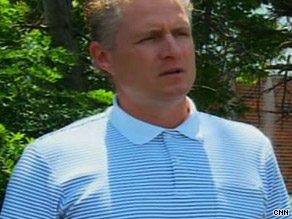
HUNTINGDON VALLEY, Pennsylvania (CNN) -- The president of The Valley Swim Club on Friday strongly denied charges of racism after his club canceled the swimming privileges of a nearby day care center whose children are predominantly African-American.

John Duesler said he underestimated the number of swimmers who would come to swim at the club.

John Duesler said he underestimated the number of swimmers who would come to swim at the club.

"It was never our intention to offend anyone," said John Duesler. "This thing has been blown out of proportion."

Duesler said his club -- which he called "very diverse" -- invited camps in the Philadelphia area to use his facility because of the number of pools in the region closed due to budget cuts this summer. He said he underestimated the amount of children who would participate, and the club's capacity to take on the groups was not up to the task.

"It was a safety issue," he said.

The Creative Steps Day Care children -- who are in kindergarten through seventh grade -- went to The Valley Swim Club in Huntingdon Valley on June 29 after the center's director, Alethea Wright, had contracted to use the club once a week.

During their first visit, some children said they heard club members asking why African-American children were there. One youngster told a Philadelphia television station a woman there said she feared the children "might do something" to her child.

Days later, the day care center's $1,950 check was returned without explanation, Wright said.

She was dismissive of Duesler's comments Friday.

"He knows what happened at the pool that day," Wright told CNN in a telephone interview. "I was embarrassed and humiliated."

She called it an "unfortunate situation," adding, "I know what happened; the members know what happened and a higher power knows what happened."

After news reports of the incident, the office of Sen. Arlen Specter (D-Pennsylvania) said Specter sent a letter to the club president asking him to reinstate the contract with Creative Steps, saying, "I think that you would agree that there is no place for racism in America today."

Duesler said he appreciates the senator's concern, but the club's board has yet to make a decision of how it will proceed.

"If we're going to revise our policies here, we need to make it so for all the camps," he said. "I just don't think we're prepared for that." 

Duesler earlier in the week told two Philadelphia television stations the children had changed "the complexion" and "atmosphere" of the club, a comment that protesters outside the facility Thursday said showed that racism was involved.

Bernice Duesler, John Duesler's wife, called the negative response her husband has faced since the incident "unbearable."

"He's not one of the good guys -- he's one of the great guys," she said, holding back tears. "He doesn't deserve this."

She added, "If there really was a racial issue that happened, my husband and I would be the first one[s] picketing."

Jim Flynn, who said he was one of the club members who made a complaint against the children, told CNN this week it was not racially motivated.

"There were a lot of children in the pool and not enough lifeguards," he said. "As general members we were not told that they were coming. If we knew, we could decide to not come when the pool was crowded or come anyway. We could have had an option."He also said invitations to two other day care centers, neither of which contained minority children, had previously been withdrawn.

Girard College, a private Philadelphia boarding school, told CNN on Thursday it would offer Creative Steps Day Care use of its facilities this summer.

Tuesday, July 7, 2009

From Ordination to Conversion- Rabbi Alysa Stanton

Rabbi Alysa Stanton

On June 6 of this year, Alysa Stanton was ordained the first African-American female rabbi and is scheduled to take the pulpit at Bayt Shalom in Greenville, North Carolina this August. JDate President Greg Liberman got the chance to sit down with Rabbi Stanton to congratulate her on her wonderful achievement and discuss the conversion process, interfaith marriage, relationships and more!

At the time, I was naïve; I didn't know I'd be the first African-American woman rabbi. I didn't know until after I was accepted and the story broke. But, if I was the 50,000th, I would still be doing it.

Greg Liberman: There are some members of our site who are not yet Jewish, who talk about their willingness to convert and their desire be part of the Jewish community. What initially drew you towards Judaism?

Rabbi Stanton: I wish I could say it was one specific moment, because it wasn't. I look back on my life now, Greg, and I unabashedly believe in G-d, and I see the puzzle pieces. My first six years were spent in Cleveland, Ohio and then we moved into Cleveland Heights, a Jewish neighborhood. The residents had Mezuzot on their doors and we didn't know what they were. My uncle, who was a devout Catholic, attended synagogue and wore a yarmulke, gave me my first Hebrew grammar book when I was 10 years old.

I was a seeker and as an adult I studied in England for a year during my undergraduate program. During that time, during one of the breaks, I had this urge to go work on a kibbutz, but I chickened out at the last minute. People ask me if I was born Jewish, and I say 'Yes, but not to a Jewish womb.' I had to make it legal, so I converted in my early 20s. But it wasn't one certain event; I didn't wake up one day, scratch my head and say, 'I think I'll become a Jew. What can I do to make life more complicated? I'll become a rabbi.' It wasn't like that at all.

Greg: At what point did you decide to head down the path of becoming a rabbi?

Rabbi Stanton: I was very involved in the Denver Jewish community. I didn't start out as a Reform Jew, so when I first walked into Temple Emanuel in Denver, heads turned. But, it wasn't 'What are you doing here?' Instead, it was 'Oh, another new face.' And so, I came back but I was leery about Reformers until I learned that Reform Judaism was about a choice, an informed choice.

I think the turning point was when we hired our first cantor who was a woman, Regina Heit, and she taught me trope. And the first time I attended Torah, it was literally like something stirred within the depths of my being. I had a hunger, a thirst to learn more. I was already teaching religious school and music, and then I became a cantorial soloist and then a prayer chaplain. People along the way were saying, 'You should go to rabbinical school, you should go to cantorial school,' but I thought I was too old and didn't have the means to uproot me and my child's lives..

The last sign of inspiration for me was a 53-year-old man who was seeking a Melton course in Judaic studies. He was a lawyer and packed up his family and went to a Conservative seminary. At that point, it was like, Okay, open the door and point the way. So, I went to my rabbi and I got his blessing and applied. At the time, I was naïve; I didn't know I'd be the first African-American woman rabbi. I didn't know until after I was accepted and the story broke. But, if I was the 50,000th, I would still be doing it.

Rabbi Alysa Stanton: Ordination photo

Greg: You mentioned that you adopted your daughter before starting this process. What are her thoughts on your ordination and the attention it has received?

Rabbi Stanton: She's an old soul and she's an amazing young woman. She's now 14 years old. She had a traditional conversion before the ink was dry on the adoption papers because I didn't want any questions regarding her status as a Jew. Having a rabbi as a mom has taught her to live in a fishbowl with grace.

Greg: I was sitting down with our rabbi a couple of weeks ago and he explained the regimented process in which synagogues interview people from rabbinical school. I went to law school and it sounds very similar to that interview process. At what point did Bayt Shalom become the congregation that most interested you?

Rabbi Stanton: Well, as you said, there's a rigorous interviewing process that's called placement where all congregations seeking rabbis and all rabbis seeking congregations converge on one campus during a 4 or 5-day period and it's brutal. But as they say, what doesn't kill you makes you stronger. Luckily, I was Bayt Shalom's first choice and they were mine.

Greg: I saw that Bayt Shalom is both a Conservative and a Reform congregation. Is that the case?

Rabbi Stanton: Yes, it is duly affiliated. It was a Conservative congregation and it joined the Reform movement a couple of years ago. I'm their first Reform rabbi.

Greg: So, the Conservative members attend different services than the Reform members?

Rabbi Stanton: Hopefully we have a happy medium; we'll have to explore. You know I come from a traditional background, so I'm able to do both and we'll see what happens. We'll use a little creativity.

Greg: As an African American, how do you think your unique cultural perspective will benefit you as a rabbi and your congregation?

It's easy to like someone or love someone when they're being good to you, but when the rubber meets the road, when things are difficult, and when there's a crossroad or a crisis, that's what really defines a relationship.

Rabbi Stanton: I haven't been asked that. Good job. I'm a rabbi first and foremost, who happens to be an African-American female. I'm not an African-American female who happens to be a rabbi, and they're not mutually exclusive. So, I don't come from that perspective. I'm coming as a rabbi and hopefully as holistically as I can.

I happen to believe in a power greater than myself that I choose to call G-d. I had one congregant who was an atheist. His spiritual power outside of himself became a doorknob because he had to trust that the knob would turn to open the door each time he exited the room and enter into a world of spirit. So, I guess I have a kind of a unique perspective there.

Greg: In talking with folks who've converted to Judaism, it seems that oftentimes their families aren't as supportive as yours have been.

Rabbi Stanton: I would be remiss to say that they weren't surprised. I think they thought it was a phase and that I was exploring Judaism as I had explored other religions. I think by the time I got to my beth din and the mikvah, they kind of figured this is the real deal. It took some time, but they are now amazing and very supportive. In fact, I had been planning the ordination service for a long time and I bought a tallis in Israel that was very special to me. I had people come from 13 states and Canada to witness my ordination. Before the ceremony, my Pentecostal sister called me into a room and presented me with a tallis. She had worked with my rabbi and my cantor and picked one out for me.

Greg: As a rabbi and a former therapist, what advice can you give to JDaters when it comes to looking for a soul mate?

Rabbi Stanton: I believe in beshert but, I believe there is no magic when it comes to soul mates and every relationship takes work. I believe that we grow into love; not fall in love and I believe that any relationship worthwhile takes time and takes work, hard work.

Greg: What type of advice have you given people on how to foster meaningful relationships?

I shot up in bed, literally in the middle of night, and I said 'Who am I to judge? Who am I to say someone's union is less sacred, less holy because they are not Jewish?'

Rabbi Stanton: It's easy to like someone or love someone when they're being good to you, but when the rubber meets the road, when things are difficult, and when there's a crossroad or a crisis, that's what really defines a relationship. I encourage couples to work hard through their issues and to realize that a relationship is like fine wine or a violin; it takes time to nurture and to grow.

Greg: I've read that you were one of the first responders to the Columbine incident when you were a therapist.

Rabbi Stanton: Yes. Not at the high school though. What people didn't realize is that the event had such a ricochet effect. The siblings of the students who were there and friends and family, it just went on spiraling.

Greg: What are your thoughts on interfaith marriages? Since you've converted yourself, I'm interested to hear your perspective.

Rabbi Stanton: I was raised in a city where there was an understanding among rabbis that no interfaith marriage would be allowed. When I came to rabbinical school, I just assumed that was how it was all over America. In Cincinnati, interfaith marriages is not only condoned, it's encouraged and I struggled. I struggled 'til I think it was January or February and I shot up in bed, literally in the middle of night, and I said 'Who am I to judge? Who am I to say someone's union is less sacred, less holy because they are not Jewish?' It was at that moment, I decided that I would perform interfaith marriages under certain conditions. There will be guidelines. While I believe our tradition is rich and strong, we have to acknowledge the demographics and the changes that have been happening within Judaism. I would rather embrace a couple than have them leave the synagogue and our faith because they were rejected because they grew to love a non-Jewish spouse.

Greg: Thank you very much for your time. Hopefully you will officiate many JDate weddings in the future.

Rabbi Stanton: Well, thank you. Thank you very much.